


 WhatsApp Us
Very attentive to my needs, educational throughout the session and made sure I was comfortable during the treatments. On my first session, my jaw hinge, which wasn’t allowing my front teeth to align properly, was released and my top and bottom teeth aligned. Looking forward to my future sessions.

Bowen Therapy for TMJ (Jaw Pain) Treatment in Kuala Lumpur (KL)
An Assessment-Led Approach Using Bowen Therapy
If you’re experiencing jaw pain, clicking, stiffness, or discomfort when chewing or opening your mouth, every appointment at My Bowen Therapy begins with a thorough assessment. People come to us for jaw pain treatment in KL at different points: some are newly aware of the problem, others have lived with TMJ symptoms for years.
A Personalised Assessment First
Your first visit starts with a personalised assessment to understand your symptoms, movement and individual circumstances. We then explain what we find and whether our assessment-led approach may be suitable for you.

700+ Google Reviews

22,000+ Clients Supported

TTDI & KLCC, Kuala Lumpur, Malaysia

Established in 2015

Physiotherapists Trained in Bowen

Free No-Obligation Consultation

What Is TMJ (Jaw Pain)?
TMJ stands for the temporomandibular joint, the joint that connects your lower jaw to your skull. You have one on each side of your face, just in front of your ears. While many people use the term “TMJ” to describe jaw pain or problems with the jaw joint, the condition itself is more accurately referred to as temporomandibular disorder (TMD). Because “TMJ” is the term most people recognise and search for, we’ll use it throughout this page.
These joints, together with the surrounding muscles and soft tissues, help you speak, chew, yawn, and open and close your mouth. Symptoms can vary from person to person and may include jaw pain, clicking, stiffness, or difficulty opening the mouth. Because there are several possible reasons why these symptoms can occur, understanding what you’re experiencing and having a thorough assessment are important first steps in deciding the most appropriate course of action.

How TMJ Can Feel
People experiencing TMJ symptoms may notice jaw pain, clicking, popping, stiffness or discomfort when chewing, talking, or yawning. Some people also experience headaches, pain around the ear, or tightness in the muscles of the jaw and face. Symptoms may be occasional or more persistent and can vary in intensity.
Why Symptoms Can Occur
TMJ symptoms can develop for a variety of reasons and don’t always originate from the jaw joint itself. Factors such as muscle tension, jaw clenching, teeth grinding, posture, previous injury or changes in jaw movement may all play a role. This is why it’s important not to make assumptions based on symptoms alone.
Why an Assessment Matters
Every person’s symptoms and circumstances are different. During your assessment, we take the time to understand your symptoms, medical and injury history, jaw movement, posture, and other factors that may be relevant to what you’re experiencing. This whole-body approach helps us build a clearer understanding of your individual situation before discussing whether our assessment-led Bowen Therapy approach may be appropriate for your needs.
The temporomandibular joints are among the most frequently used joints in the body, working every time you eat, speak or yawn. Because they rely on coordinated movement between the joints, muscles and surrounding tissues, changes in how these structures work together may influence how the jaw feels and moves.
For people looking specifically for TMJ or jaw pain treatment in KL and across Malaysia, this assessment is the starting point rather than a fixed programme; what we do next depends entirely on what we find.
Why Choose My Bowen Therapy for TMJ (Jaw Pain)?
Whether you are searching for jaw pain therapy in Kuala Lumpur or TMJ support further afield in Malaysia, our approach stays the same: assessment first, treatment tailored to what we find.

Assessment-Led Care
We begin by listening to your story and considering your symptoms, relevant history, posture and jaw movement before deciding what may be appropriate for you.

Experienced, Consistent Approach
Our therapists come from physiotherapy and sports science backgrounds and are all trained in our Bowen approach, working to shared My Bowen Therapy standards

Personalised Care
Jaw pain can present differently from person to person. Your care is tailored to your assessment findings, individual needs and how your body responds.

Whole-Body Approach
We don’t automatically focus only on the jaw. Where relevant, we may also consider movement through the neck, shoulders and upper back.

Founder-Led Standards
Our therapists follow shared My Bowen Therapy standards developed by founder Lorna Mair, supporting a consistent approach to assessment and personalised care.

Established in 2015
My Bowen Therapy has been established in Kuala Lumpur since 2015 and has supported more than 22,000 clients. Our two clinics, in Damansara (TTDI) and KLCC, see people for jaw pain treatment in Kuala Lumpur and for TMJ-related symptoms from across Malaysia.
Trusted by Clients Across Kuala Lumpur

700+
Public Google Reviews

3,500+
Verified In-Centre Reviews

4,200+
Combined Client Reviews

22,000+
Clients Supported

 Yogaraj Paramanthan
I originally came in because of headaches caused by a stiff neck and shoulders. I really appreciated that my concerns were listened to carefully and that every session began with an assessment. Each appointment felt personalised, and the approach was adapted to how my body was responding.
Lilian Chee
I really appreciate how attentive the team has been to what’s going on. It means a lot that they understand what seems to trigger my pain and adjust things carefully. It makes me feel listened to and more confident in the therapy.
Jacqueline Liaw
Awards & Recognition

Readers’ Choice 2019
Winner, Natural Health Readers’ Choice Awards 2019.

Readers’ Choice 2018
Winner, Natural Health Readers’ Choice Awards 2018.

Superbrands 2016
Named Superbrands Malaysia’s Choice in 2016.

FHT Excellence 2016
Finalist, FHT Complementary Therapist of the Year 2016.

Natural Health
Featured in Natural Health Malaysia on complementary wellbeing.

RunSociety
Featured in RunSociety on Lorna Mair’s Bowen Therapy techniques.

BFM 89.9
Featured on BFM 89.9 Health & Living discussing Bowen Therapy.
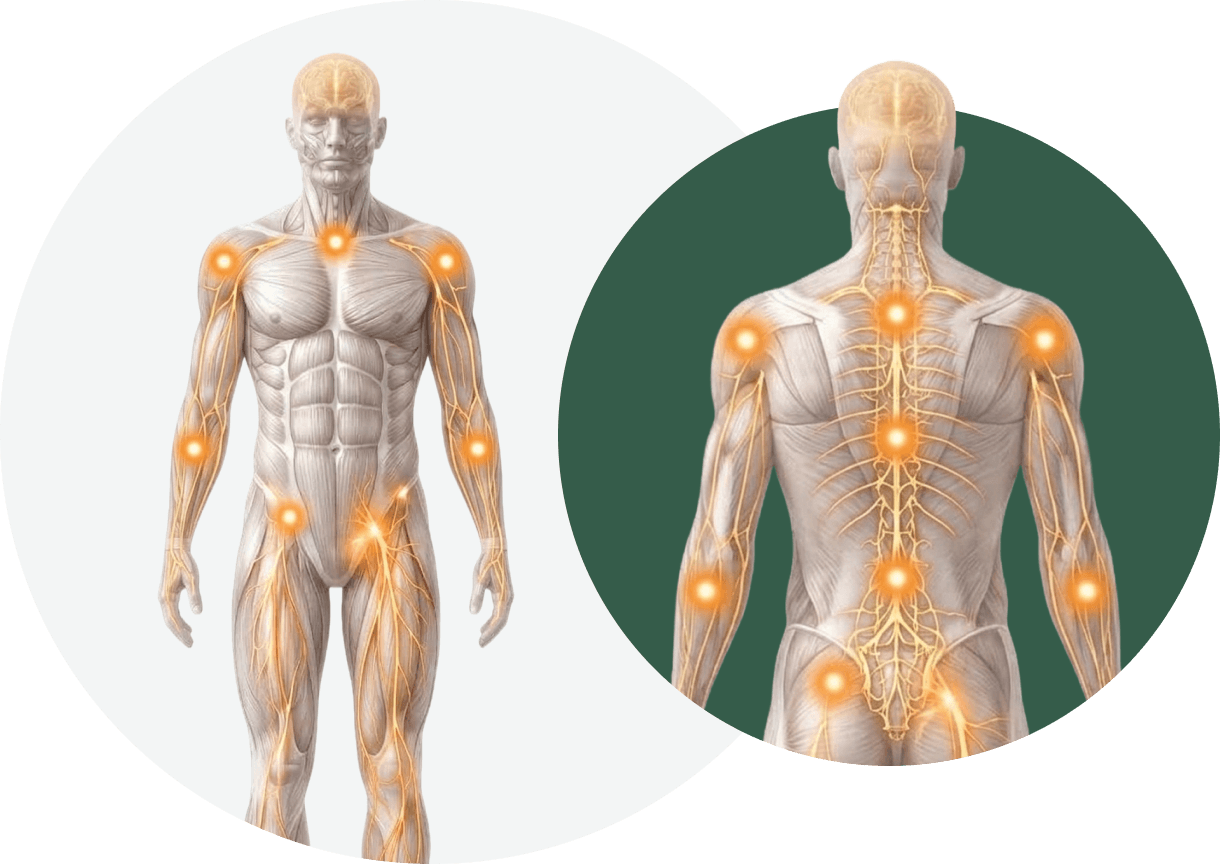
Why We Take a Full Body Assessment Before Therapy Starts?
Jaw pain and TMJ symptoms can sometimes involve more than just the jaw joint itself. The way you move, your posture, muscle tension, and other factors may all contribute to how your symptoms present. Because every person’s experience is different, we begin with a thorough assessment to better understand what you’re experiencing before discussing the most appropriate approach for your individual needs.
Rather than focusing solely on where you feel pain, we take the time to assess how your body moves as a whole. This assessment-led approach helps us build a clearer picture of your symptoms and supports informed decisions about your care.
Looking Beyond the Symptoms
Understanding Fascia
Why It Matters
Empowering You Through Understanding
Looking Beyond the Symptoms
Rather than focusing solely on the area where you’re experiencing symptoms, we consider how different areas of your body may influence movement and overall function. This whole-body perspective helps us build a more complete understanding of your individual needs.

Understanding Fascia
Fascia is a continuous network of connective tissue that surrounds, supports and connects muscles, joints, nerves and organs throughout the body. Although awareness of fascia has grown significantly in recent years, many people are still unfamiliar with the important role it plays in movement and support.
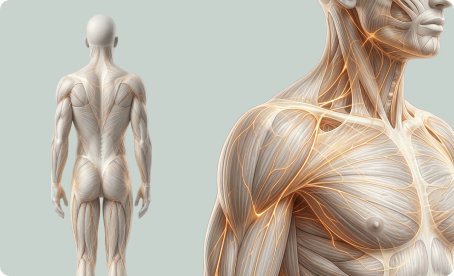
Why It Matters
Understanding fascia and the body’s interconnected nature helps us appreciate how different areas of the body work together to support movement and function. That’s why we look beyond the area where you’re experiencing symptoms during your assessment.
By considering the whole body, we aim to better understand the factors that may be relevant to the symptoms you’re experiencing and support your individual needs.

Empowering You Through Understanding
We believe that helping people understand how their body works is an important part of supporting their recovery and long-term wellbeing. By explaining our findings, answering your questions and involving you in your care, we aim to help you feel informed and confident throughout your journey.

Looking Beyond the Symptoms
Looking Beyond the Symptoms
Rather than focusing solely on the area where you’re experiencing symptoms, we consider how different areas of your body may influence movement and overall function. This whole-body perspective helps us build a more complete understanding of your individual needs.
Understanding Fascia
Understanding Fascia
Fascia is a continuous network of connective tissue that surrounds, supports and connects muscles, joints, nerves and organs throughout the body. Although awareness of fascia has grown significantly in recent years, many people are still unfamiliar with the important role it plays in movement and support.
Why It Matters
Why It Matters
Understanding fascia and the body’s interconnected nature helps us appreciate how different areas of the body work together to support movement and function. That’s why we look beyond the area where you’re experiencing symptoms during your assessment.
By considering the whole body, we aim to better understand the factors that may be relevant to the symptoms you’re experiencing and support your individual needs.
Empowering You Through Understanding
Empowering You Through Understanding
We believe that helping people understand how their body works is an important part of supporting their recovery and long-term wellbeing. By explaining our findings, answering your questions and involving you in your care, we aim to help you feel informed and confident throughout your journey.
Understanding Possible Causes of TMJ (Jaw Pain)
TMJ symptoms can develop for a number of reasons. In many cases, discomfort may involve the jaw joint, the surrounding muscles, or other structures that help the jaw move smoothly.
Because several different factors may contribute to TMJ symptoms, it’s important not to assume that everyone has the same underlying cause. Similar symptoms can occur for different reasons, which is why a thorough assessment is an important first step in understanding what may be contributing to your jaw pain. TMJ pain causes and jaw pain symptoms are best understood together rather than treated as separate questions.

Jaw Muscles and Soft Tissues
The muscles and soft tissues around the jaw play an important role in chewing, speaking and everyday movement. Tightness, tension or changes in how these muscles work may influence how the jaw feels or moves in some people.
Teeth Grinding and Jaw Clenching
Some people who grind their teeth or clench their jaw, particularly during sleep or periods of stress, may notice jaw discomfort, muscle tension or stiffness. These habits can place additional load on the jaw muscles and joints over time.
Neck, Head and Posture
The jaw does not work in isolation. The neck, head and surrounding muscles all work together during movement. In some people, changes in posture or muscle tension around the neck and upper body may be relevant to the symptoms they’re experiencing, which is one reason we take a whole-body approach during our assessments.
Every Person Is Different
Previous injuries, dental history, posture, movement patterns, daily activities and general health may all influence how jaw symptoms present. Rather than making assumptions based on symptoms alone, we aim to understand each person’s individual circumstances before discussing the most appropriate approach.
Common TMJ (Jaw Pain) Symptoms
TMJ symptoms can vary from person to person. Some people experience mild discomfort that comes and goes, while others may find their symptoms more persistent or disruptive to everyday activities.
Symptoms may affect one or both sides of the jaw and can change over time. They may also vary depending on activities such as eating, talking, yawning or periods of jaw tension.

Jaw Pain
Pain may be felt in the jaw joint, around the cheeks or in front of the ears. Some people describe it as a dull ache, while others notice sharp discomfort during certain jaw movements or when chewing.
Clicking, Popping or Locking
Some people notice clicking, popping, or catching sensations when opening or closing their mouth. In some cases, the jaw may feel stiff or temporarily lock, making it more difficult to open or close fully.
Headaches and Facial Tension
TMJ symptoms may occur alongside headaches, facial muscle tightness or discomfort around the temples, cheeks or jaw muscles. Some people also notice pain that seems to spread towards the neck or around the ears, or discomfort when yawning. This overlap is sometimes described as a temporomandibular joint headache, particularly where jaw tension and head pain appear closely linked.
Symptoms Can Change
TMJ symptoms don’t always remain the same. Some people find their symptoms become more noticeable after chewing, talking for long periods, yawning, or during times of stress, while others notice they come and go. Every person’s experience is different.
Our Dedicated Specialists in Assessment & Therapy

Senior Therapist Hafiy
Senior Pain Relief Specialist
Read Bio

Senior Therapist Hanan
Pain Relief Specialist
Read Bio

Senior Therapist Nurul
Senior Pain Relief Specialist
Read Bio

Therapist Olivia
Pain Relief Specialist
Read Bio

Senior Therapist Ala
Senior Pain Relief Specialist
Read Bio

Senior Therapist Aazeen
Pain Relief Specialist
Read Bio
How We Assess Your TMJ (Jaw Pain) & Symptoms
Every person experiences TMJ symptoms differently. That’s why every consultation begins with a thorough assessment. We’ll discuss your symptoms, relevant health and dental history, observe your posture, jaw movement and overall movement patterns, and assess factors that may be relevant to what you’re experiencing. We then develop a personalised support plan tailored to your individual needs and goals.

We Listen
We take the time to understand your symptoms, when they began, any teeth grinding, clenching or dental history that may be relevant, and how your jaw is affecting everyday activities such as eating or talking.

We Observe
We observe your posture and jaw movement, including how comfortably you open and close your mouth, to build a clearer picture of your individual needs.
We Assess
We assess factors that may be relevant to your symptoms, including jaw movement patterns, muscle tension through the jaw and neck, and how one side compares with the other.
The My Bowen Therapy Approach to TMJ (Jaw Pain)
Every person experiences jaw pain and TMJ symptoms differently. That’s why every consultation begins with a thorough assessment. We’ll discuss your symptoms and relevant dental history, observe your posture and jaw movement, and assess movement through your neck and upper back where appropriate. We then develop a personalised support plan tailored to your individual needs.
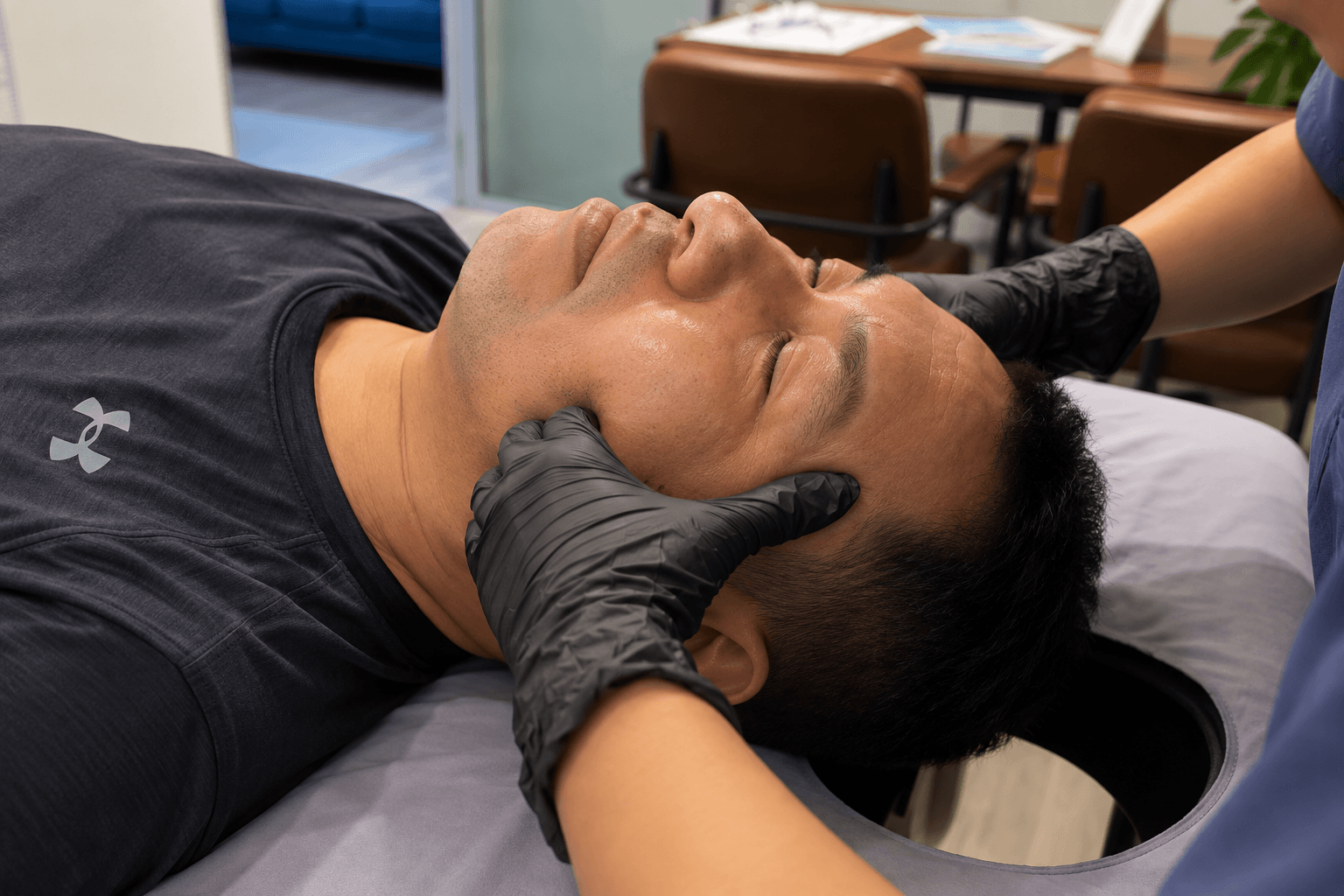

Precise Hands-On Techniques
Targeted Bowen Therapy movements are applied over muscles, fascia and other soft tissues according to your individual needs.
Jaw & Surrounding Tissues
Treatment may involve the jaw, neck and surrounding soft tissues depending on your assessment findings.
Looking Beyond the Jaw
Your therapist may also work with other areas identified as relevant during your assessment.
Adapted Throughout Your Care
Treatment can be adjusted according to your movement, comfort and response.
What to Expect During Your My Bowen Therapy Session

Tailored to You
Every session is tailored to your individual needs based on your assessment and how your body responds.

Remain Fully Clothed
Wear comfortable clothing that allows your therapist to assess and work effectively. Shorts, leggings, tracksuit bottoms or loose-fitting sportswear are ideal.

Gentle Hands-On Treatment
Your therapist uses gentle Bowen Therapy movements while continuing to observe your body’s response throughout the session.

Comfort Comes First
Most people find Bowen Therapy relaxing. Treatment is always adapted to your comfort levels, and any tenderness is usually temporary.

Before You Leave
Your therapist explains their findings, discusses the next steps and, where appropriate, provides simple exercises or practical advice to support your progress between sessions.
Frequently Asked Questions
TMJ stands for the temporomandibular joint, which connects your lower jaw to your skull. While many people use the term “TMJ” to describe jaw pain or problems with the jaw joint, the condition itself is more accurately referred to as temporomandibular disorder (TMD). Because “TMJ” is the term most people recognise and search for, we’ll use it throughout this page.
The jaw joints and surrounding muscles help you chew, speak, yawn, and open and close your mouth. A thorough assessment can help identify factors that may be contributing to your symptoms.
TMJ symptoms can develop for a variety of reasons, and there isn’t always a single cause. Factors such as muscle tension, jaw clenching, teeth grinding, previous injury, posture, changes in jaw movement, or other factors affecting the jaw and surrounding tissues may all play a role. Because similar symptoms can occur for different reasons, an individual assessment is an important first step in understanding what may be contributing to your jaw pain.
Common TMJ symptoms may include jaw pain, clicking or popping, stiffness, difficulty opening or closing the mouth, discomfort when chewing, headaches, facial muscle tension or pain around the ears. Symptoms vary from person to person and may change over time, which is why it’s important not to assume everyone experiences TMJ in the same way.
Jaw clicking or popping can occur for a number of reasons and doesn’t always indicate a serious problem. In some people it may occur without pain, while others experience clicking alongside jaw discomfort, stiffness, or difficulty opening the mouth. Because there are several possible causes, a thorough assessment can help determine what factors may be contributing to your symptoms.
Some people with TMJ symptoms also experience headaches, facial discomfort or neck tension. The jaw, neck and surrounding muscles work closely together, so symptoms can sometimes occur alongside one another. During your assessment, we consider your symptoms as a whole rather than focusing only on the area where you feel pain.
Some people experiencing TMJ symptoms also notice pain, discomfort or a feeling of fullness around the ear. Because the jaw joint sits close to the ear and shares muscles and nerves with surrounding structures, these symptoms can sometimes occur together. However, ear pain can have many different causes, so an assessment is important to better understand what may be contributing to your symptoms.
Yes. We have two Kuala Lumpur locations, Damansara (TTDI) and KLCC, and both offer a free initial consultation with no obligation to continue. We also see people who travel from further afield across Malaysia.
Most jaw pain and TMJ symptoms are not a medical emergency. However, you should seek prompt medical or dental assessment if you experience jaw pain following a significant injury or blow to the face, are suddenly unable to open or close your mouth, notice swelling, fever or signs of infection, or have severe pain that is not improving. If you’re unsure whether your symptoms need urgent attention, it’s always safest to seek medical or dental advice.
How We Can Help You with Other Therapy Services


Our Kuala Lumpur Locations
Visit My Bowen Therapy at our two convenient Kuala Lumpur locations for gentle, hands-on Bowen Therapy support with pain, posture, tension and movement concerns.

Damansara / TTDI Area
Glomac Damansara Block A, Level 2, Unit 5 A-02-05, Jalan Damansara, 60000 Kuala Lumpur
-
 Next to TTDI MRT station
-
 Convenient for TTDI, Bangsar, Mont Kiara and for anyone travelling from Petaling Jaya.
-
 Lift access available
-
 Open daily, 9:00am–5:00pm
KLCC / Etiqa Twins
KLCC-Etiqa Twins, Main Podium Level 2, Unit 2.5, 11 Jalan Pinang, 50450 Kuala Lumpur.
-
A short walk from KLCC, Bukit Bintang and the surrounding city-centre offices.
-
Convenient for office workers
-
Escalator & lift access available
-
Open Tuesday–Thursday : 9:00am–5:00pm
Ready to Take the First Step?
Book your FREE Consultation and Posture Assessment to find out whether the My Bowen Therapy approach may be right for you.
Your consultation includes
- Discussion about your symptoms
- Personalised posture and movement assessment
- Opportunity to ask questions
- Personalised recommendations

