


 WhatsApp Us
Great explanation by Hafiy on my shoulder issue and the different technique/treatment that is being used at Bowen Therapy.Shoulder feels less tight and a few more sessions are needed.

Bowen Therapy for Shoulder Pain & Tension Treatment in Kuala Lumpur (KL)
An Assessment-Led Approach Using Bowen Therapy
Shoulder pain or tension can affect everything from reaching overhead and exercising to working at a desk or sleeping comfortably. People come to us for shoulder pain treatment in KL at different stages, and every new client begins with a comprehensive whole-body assessment to identify musculoskeletal factors that may be contributing to their symptoms.
A Personalised Assessment First
Your first visit starts with a personalised assessment to understand your symptoms, movement and individual circumstances. We then explain what we find and whether our assessment-led approach may be suitable for you.

700+ Google Reviews

22,000+ Clients Supported

TTDI & KLCC, Kuala Lumpur, Malaysia

Established in 2015

Physiotherapists Trained in Bowen

Free No-Obligation Consultation

Experiencing Shoulder Pain, Tightness or Restricted Movement?
Shoulder pain and tension can involve more than discomfort. Your shoulder may feel tight, stiff, or simply harder to move during everyday activities.
Shoulder pain can have many different causes. Because symptoms may relate to the shoulder itself or to how the surrounding areas are moving, understanding what you’re experiencing and having a thorough assessment are important first steps in deciding the most appropriate course of action.

Why Symptoms Can Occur
Sometimes there is an obvious reason your shoulder started hurting. Other times, discomfort or restriction develops gradually without one clear event. There are a number of reasons why this can happen, and the location or intensity of symptoms doesn’t always tell the whole story. This is one reason why it’s important to consider each person’s symptoms and movement individually rather than making assumptions based on symptoms alone.
Why an Assessment Matters
Every person experiences shoulder symptoms differently. During your assessment, we take the time to understand your symptoms, medical and injury history, posture, movement, and other factors that may be relevant to what you’re experiencing. This whole-body approach helps us develop a personalised support plan tailored to your individual needs.
Why Choose My Bowen Therapy for Shoulder Pain & Tension?
At My Bowen Therapy, we take an individual, assessment-led approach to shoulder pain, tension and related shoulder problems. We take the time to understand your symptoms, movement and relevant history before tailoring your care.

Assessment-Led Care
We begin by listening to your story and considering your symptoms, relevant history, posture and movement before deciding what may be appropriate for you.

Experienced, Consistent Approach
Our therapists come from physiotherapy and sports science backgrounds and are all trained in our Bowen approach, working to shared My Bowen Therapy standards.

Personalised Care
Shoulder pain and tension can present differently from person to person. Your care is tailored to your assessment findings, individual needs and how your body responds

Whole-Body Approach
We don’t automatically focus only on the shoulder. Where relevant, we may also consider movement through the neck, shoulder blade, upper back and surrounding areas.

Founder-Led Standards
Our therapists follow shared My Bowen Therapy standards developed by founder Lorna Mair, supporting a consistent approach to assessment and personalised care.

Established Since 2015
My Bowen Therapy has been established in Kuala Lumpur since 2015 and has supported more than 22,000 clients. Our two centres, in Damansara (TTDI) and KLCC, see people for shoulder pain treatment in Kuala Lumpur and across Malaysia.
Trusted by Clients Across Kuala Lumpur

700+
Public Google Reviews

3,500+
Verified In-Centre Reviews

4,200+
Combined Client Reviews

22,000+
Clients Supported

 Syam Hassan
I do my treatment with Ms Wong Xiu Wen. Bowen and Ms Wong have helped me tremendously with my neck, shoulder and nerve issues. After 3-4 treatments, I felt so much better. I will be continuing my treatments for maintenance which I feel is a must.
Simonexenia yeoh
I have been experiencing shoulder pains from an impingement for years …. I have a new hope and my whole experience has been excellent.
Crystal Kay
Awards & Recognition

Readers’ Choice 2019
Winner, Natural Health Readers’ Choice Awards 2019.

Readers’ Choice 2018
Winner, Natural Health Readers’ Choice Awards 2018.

Superbrands 2016
Named Superbrands Malaysia’s Choice in 2016.

FHT Excellence 2016
Finalist, FHT Complementary Therapist of the Year 2016.

Natural Health
Featured in Natural Health Malaysia on complementary wellbeing.

RunSociety
Featured in RunSociety on Lorna Mair’s Bowen Therapy techniques.

BFM 89.9
Featured on BFM 89.9 Health & Living discussing Bowen Therapy.
Why Your Assessment May Include More Than Just Your Shoulder
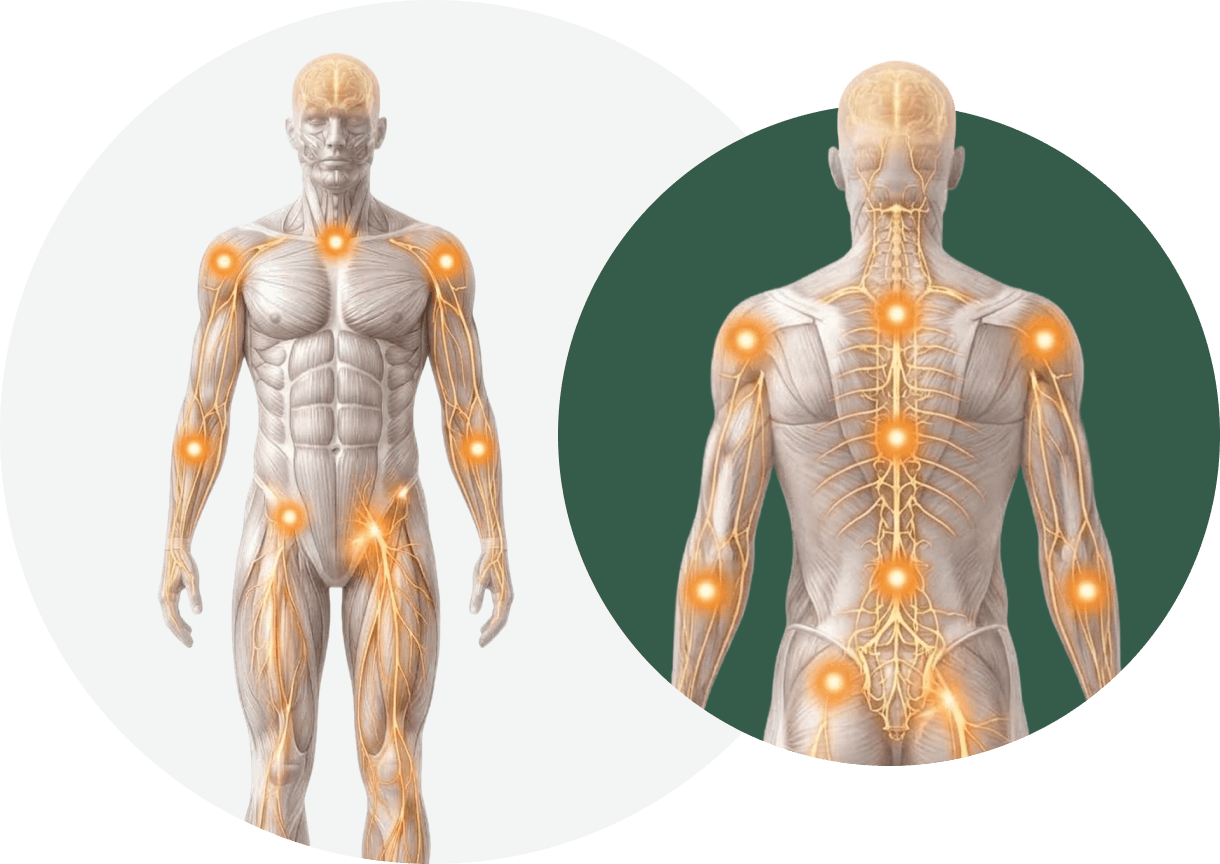
Your shoulder does not work in isolation. Depending on your presentation, your therapist may assess your shoulder, shoulder blade, neck, upper and lower back, posture and overall movement to build a broader picture of how your body is moving.
In our experience, some people with shoulder pain or tension also have areas of longstanding tension or reduced movement elsewhere that they had stopped noticing or simply become accustomed to over time.
We may also consider previous injuries, surgery, differences in movement between sides, and work, sport or everyday activities that could be relevant to your presentation.
Not every factor will be relevant to every person, and findings elsewhere in the body do not necessarily explain the cause of your shoulder symptoms. Your assessment helps us understand your individual presentation before discussing the most appropriate approach to your care.
Looking Beyond the Symptoms
Understanding Fascia
Why It Matters
Empowering You Through Understanding
Looking Beyond the Symptoms
Rather than focusing solely on the area where you’re experiencing symptoms, we consider how different areas of your body may influence movement and overall function. This whole-body perspective helps us build a more complete understanding of your individual needs.

Understanding Fascia
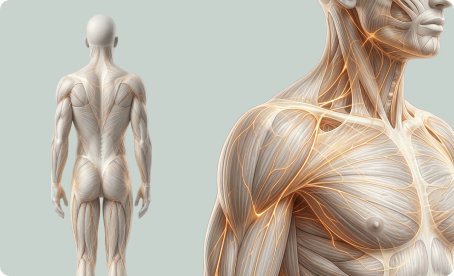
Fascia is a continuous network of connective tissue that surrounds, supports and connects muscles, joints, nerves and organs throughout the body. Although awareness of fascia has grown significantly in recent years, many people are still unfamiliar with the important role it plays in movement and support.
Why It Matters
Understanding fascia and the body’s interconnected nature helps us appreciate how different areas of the body work together to support movement and function. That’s why we look beyond the area where you’re experiencing symptoms during your assessment.
By considering the whole body, we aim to better understand the factors that may be relevant to the symptoms you’re experiencing and support your individual needs.

Empowering You Through Understanding
We believe that helping people understand how their body works is an important part of supporting their recovery and long-term wellbeing. By explaining our findings, answering your questions and involving you in your care, we aim to help you feel informed and confident throughout your journey.

Looking Beyond the Symptoms
Looking Beyond the Symptoms
Rather than focusing solely on the area where you’re experiencing symptoms, we consider how different areas of your body may influence movement and overall function. This whole-body perspective helps us build a more complete understanding of your individual needs.
Understanding Fascia
Understanding Fascia
Fascia is a continuous network of connective tissue that surrounds, supports and connects muscles, joints, nerves and organs throughout the body. Although awareness of fascia has grown significantly in recent years, many people are still unfamiliar with the important role it plays in movement and support.
Why It Matters
Why It Matters
Understanding fascia and the body’s interconnected nature helps us appreciate how different areas of the body work together to support movement and function. That’s why we look beyond the area where you’re experiencing symptoms during your assessment.
By considering the whole body, we aim to better understand the factors that may be relevant to the symptoms you’re experiencing and support your individual needs.
Empowering You Through Understanding
Empowering You Through Understanding
We believe that helping people understand how their body works is an important part of supporting their recovery and long-term wellbeing. By explaining our findings, answering your questions and involving you in your care, we aim to help you feel informed and confident throughout your journey.
Understanding Shoulder Pain & Common Shoulder Problems
Many people use the term “shoulder pain” to describe a wide range of symptoms. Some have a specific diagnosis, while others simply know their shoulder hurts or feels restricted. Understanding the underlying cause usually requires an appropriate assessment, the starting point whether you’re looking into shoulder pain treatment in Kuala Lumpur and in Malaysia more broadly.
The shoulder is designed to move in many different directions. The upper arm bone, shoulder blade and collarbone form part of the shoulder complex, supported by muscles, tendons, ligaments, fascia and other soft tissues.
Raising and moving your arm does not involve the shoulder joint alone. The shoulder blade and surrounding areas also need to move and work together. Shoulder pain, tension and restricted movement can have many different presentations.

Shoulder Pain & Tension
Shoulder discomfort can develop after repetitive activity, prolonged sitting, exercise or changes in the way you move. Sometimes one shoulder simply begins to feel persistently tighter or less comfortable than the other, which some people describe as shoulder muscle pain or general shoulder pain and tension.
Shoulder Bursitis
Shoulder bursitis involves irritation of one of the small fluid-filled bursae around the shoulder. Symptoms can include pain when raising the arm, reaching or lying on the affected side.
Rotator Cuff-Related Shoulder Pain
The rotator cuff is a group of muscles and tendons that helps control and stabilise the shoulder. Problems involving this area can be associated with pain, weakness or discomfort during certain movements. Some people may also have been diagnosed with shoulder impingement or experience discomfort when lifting or reaching overhead.
Tendon-Related Shoulder Pain
Shoulder tendons can become painful or irritated, sometimes in association with repetitive activity, sport or changes in how the shoulder is being used.
Shoulder pain can also relate to joint-related changes such as shoulder arthritis, which may be associated with stiffness, aching or reduced movement, particularly in older adults.
Frozen Shoulder
Frozen shoulder, also known as adhesive capsulitis, typically involves significant stiffness and increasing restriction of shoulder movement. Not every painful or restricted shoulder is frozen shoulder.
Common Shoulder Pain & Tension Symptoms
Shoulder symptoms can vary from person to person. Some people experience mild discomfort that comes and goes, while others find their symptoms more persistent or disruptive to everyday activities.
Symptoms may affect one shoulder or both, and can change over time. They may also vary depending on movement, body position, and which activities you have been doing.

Pain
Pain may be felt across the shoulder, at the front or side, or around the upper arm. Some people describe it as sharp during particular movements, while others describe a dull, persistent ache that is more noticeable at certain times of day.
Symptoms Can Change
Shoulder symptoms don’t always remain the same. Some people find discomfort more noticeable during exercise or sport, when lying on the affected side, or after sitting at a desk, while others find gentle movement helps. Every person’s experience is different.
Stiffness & Restricted Movement
Movement may feel restricted or uncomfortable rather than painful. Lifting the arm overhead or reaching behind the back are often the movements people notice first, and everyday tasks such as dressing or reaching into a cupboard can become harder.
Tension Beyond the Shoulder
Pain or tension may extend towards the neck, shoulder blade, or upper arm, sometimes described as shoulder blade pain. Some people also notice one shoulder moving differently from the other, or tightness across the upper back alongside their shoulder symptoms.
Our Dedicated Specialists in Assessment & Therapy

Senior Therapist Hafiy
Senior Pain Relief Specialist
Read Bio

Senior Therapist Hanan
Pain Relief Specialist
Read Bio

Senior Therapist Nurul
Senior Pain Relief Specialist
Read Bio

Therapist Olivia
Pain Relief Specialist
Read Bio

Senior Therapist Ala
Senior Pain Relief Specialist
Read Bio

Senior Therapist Aazeen
Pain Relief Specialist
Read Bio
How We Assess Your Shoulder Pain & Symptoms
Every person experiences shoulder pain, tension or restricted movement differently. That’s why every consultation begins with a thorough assessment. We’ll discuss your symptoms, relevant health and injury history, daily activities and any factors that may be contributing to your shoulder discomfort. We’ll also observe your posture, movement, and how your shoulder moves, and assess factors that may be relevant to what you’re experiencing. We then develop a personalised support plan tailored to your individual needs and goals.

We Listen
We take the time to understand your symptoms, concerns, relevant health history, previous injuries and goals.

We Observe
We observe your posture and movement to build a clearer picture of your individual needs.

We Assess
We assess factors that may be relevant to your symptoms, including movement patterns, muscle and fascial tension, and how movement compares from one shoulder to the other.

We Explain
We explain our findings in clear, straightforward language and answer any questions you may have.

We Create Your Support Plan
Based on your assessment, we develop a personalised support plan tailored to your individual needs and goals.

We Begin Your Care
If you decide to proceed, we’ll begin your personalised Bowen Therapy sessions and continue to monitor how your body responds throughout your care.
The My Bowen Therapy Approach to Shoulder Pain & Tension
Every person experiences shoulder pain differently. That’s why every consultation begins with a thorough assessment. We’ll discuss your symptoms and relevant injury history, observe your posture and movement, and assess movement through your neck, shoulder blade and upper back where appropriate. We then develop a personalised support plan tailored to your individual needs.


Precise Hands-On Techniques
Targeted Bowen Therapy movements are adapted to your individual needs and assessment findings.
Shoulder & Surrounding Tissues
Treatment may involve the shoulder, shoulder blade and surrounding soft tissues depending on your assessment findings.
Looking Beyond the Shoulder
Your therapist may also work with other areas identified as relevant during your assessment.
Adapted Throughout Your Care
Treatment can be adjusted according to your movement, comfort and response.
What to Expect During Your My Bowen Therapy Session

Tailored to You
Every session is tailored to your individual needs based on your assessment and how your body responds.

Remain Fully Clothed
Wear comfortable clothing that allows your therapist to assess and work effectively. Shorts, leggings, tracksuit bottoms or loose-fitting sportswear are ideal.

Gentle Hands-On Treatment
Your therapist uses gentle Bowen Therapy movements while continuing to observe your body’s response throughout the session.

Comfort Comes First
Most people find Bowen Therapy relaxing. Treatment is always adapted to your comfort levels, and any tenderness is usually temporary.

Before You Leave
Your therapist explains their findings, discusses the next steps and, where appropriate, provides simple exercises or practical advice to support your progress between sessions.
Frequently Asked Questions
People experiencing shoulder pain, tension, stiffness or restricted movement may choose Bowen Therapy as part of their care. However, every person’s presentation is different and we don’t promise a particular outcome.
At My Bowen Therapy, we begin with an assessment to understand your symptoms, movement and individual circumstances before discussing whether Bowen Therapy may be appropriate for you. This assessment-led approach is central to how we think about our shoulder pain treatment in Kuala Lumpur, starting with what’s actually happening in your body rather than assuming every shoulder needs the same response.
If you’ve been diagnosed with shoulder bursitis, you can still book a consultation with My Bowen Therapy.
Bowen Therapy does not treat or cure an inflamed bursa itself. Your therapist will consider your diagnosis alongside your symptoms, movement and assessment findings when discussing whether our approach may be appropriate for you.
If you’ve been diagnosed with a rotator cuff problem, you can still book a consultation. Your therapist will consider your diagnosis alongside your symptoms, shoulder movement and assessment findings before discussing whether Bowen Therapy may be appropriate as part of your care.
If you have scans or reports from a doctor or other healthcare professional, you’re welcome to bring them with you.
The shoulder, shoulder blade, neck and upper back work together during normal movement.
This doesn’t mean shoulder pain is necessarily caused by another area, but it is one reason our assessment may consider more than the exact location where you feel discomfort.
Frozen shoulder, or adhesive capsulitis, typically involves significant stiffness and progressive restriction of shoulder movement.
General shoulder pain can have many different presentations and doesn’t necessarily involve the characteristic restriction associated with frozen shoulder.
Yes. Bowen Therapy can be used as complementary care alongside medical treatment, physiotherapy or other healthcare.
If you’re currently receiving care from another healthcare professional, continue following their advice and let your Bowen therapist know about your existing treatment during your consultation.
This varies depending on your individual presentation, how long you’ve been experiencing symptoms and how you respond to treatment.
Your therapist will discuss their recommendations with you after your assessment rather than prescribing the same number of sessions for everyone.
We have two Kuala Lumpur locations, Damansara (TTDI) and KLCC. Both offer a free initial consultation and are convenient for TTDI, Bangsar, Mont Kiara, KLCC and Bukit Bintang.
Seek prompt medical advice if your shoulder pain follows a significant injury or accident, is sudden or severe, is rapidly worsening, or is accompanied by concerning symptoms such as significant weakness, loss of sensation, severe swelling, deformity or feeling seriously unwell.
If you’re unsure whether your symptoms require medical assessment, it’s safest to seek appropriate medical advice.
How We Can Help You with Other Therapy Services


Our Kuala Lumpur Locations
Visit My Bowen Therapy at our two convenient Kuala Lumpur locations for gentle, hands-on Bowen Therapy support with pain, posture, tension and movement concerns.

Damansara / TTDI Area
Glomac Damansara Block A, Level 2, Unit 5 A-02-05, Jalan Damansara, 60000 Kuala Lumpur
-
 Next to TTDI MRT station
-
 Convenient for TTDI, Bangsar, Mont Kiara and for anyone travelling from Petaling Jaya.
-
 Lift access available
-
 Open daily, 9:00am–5:00pm
KLCC / Etiqa Twins
KLCC-Etiqa Twins, Main Podium Level 2, Unit 2.5, 11 Jalan Pinang, 50450 Kuala Lumpur.
-
A short walk from KLCC, Bukit Bintang and the surrounding city-centre offices.
-
Convenient for office workers
-
Escalator & lift access available
-
Open Tuesday–Thursday : 9:00am–5:00pm
Ready to Better Understand Your Shoulder Pain or Restricted Movement?
If you’re experiencing shoulder pain, tightness, stiffness or restricted movement, a free consultation gives us an opportunity to understand your individual presentation and discuss whether the My Bowen Therapy approach may be appropriate for you. If you’re looking into shoulder pain treatment in Kuala Lumpur and across Malaysia, your consultation is where that starts, understanding your individual presentation before discussing whether our approach may be right for you.