

It creeps in by mid-afternoon. A dull squeeze across the forehead, a band tightening around the head, a heaviness at the base of the skull after hours at the screen. By the time you are in traffic on the way home, your shoulders are up near your ears, and your jaw is clenched without you realising.
Key Takeaways
- Head pressure from stress and tension usually feels like a tight band around the head and is rarely a sign of anything serious.
- These headaches often build through tight muscles in the neck, shoulders, jaw, and scalp.
- Quick relief often comes from simple steps: a screen break, water, warmth on the neck, and unclenching the jaw.
- Keeping them away means looking at sleep, caffeine, hydration, desk set-up and clenching, and not relying on painkillers too often.
- A sudden, severe headache, or one with weakness, confusion, or fever and a stiff neck, needs emergency care.
That feeling of tension in the head is one of the most common complaints there is, and it is usually linked to stress and tight muscles rather than anything serious. This article explains what causes it, how to tell a stress headache from other kinds of head pressure, what helps in the moment, what helps stop it coming back, and when a headache needs a doctor.
First, When a Headache Needs Urgent Attention
Most headaches are not serious, but a few need medical help straight away. It is worth ruling these out first.
Call 999 immediately if you have:
- A sudden, severe headache that reaches its worst within seconds or minutes
- Weakness or numbness on one side, a drooping face, slurred speech or confusion
- A headache after a head injury
- A headache with fever and a stiff neck, or a rash
- A fit, fainting, or sudden loss of vision
See a doctor promptly if you have:
- A new type of headache, particularly if you are over 50
- Headache with jaw pain when chewing, a tender scalp or changes in vision
- Headaches that keep getting worse, or wake you at night
- A headache that is worse when coughing, straining or lying down, or comes with repeated vomiting
- A headache during pregnancy with blurred vision or swelling in the face or hands
- Headaches on most days, or a need for painkillers most days
This list cannot tell you what type of headache you have. If something feels different or wrong, speak to a doctor.
What Does Tension in the Head Feel Like?
Tension in the head usually feels like a steady, pressing or squeezing pain on both sides, rather than a throbbing one. Penn Medicine notes that people often describe it as a clamp or band squeezing the forehead and temples.
The tightness often spreads into the back of the head, the neck and the shoulders. It can last from half an hour to several days, and it rarely comes with the nausea or light sensitivity typical of migraine.
It is also very common. Around half of adults have a tension headache at some point, and the NHS notes that tension headaches are not a sign of an underlying condition.
What Causes a Stress Headache?
It usually comes from a mix of stress and muscle tension around the neck, shoulders, jaw and scalp. Poor sleep, dehydration and long hours in one position often add to it.
Cleveland Clinic notes that no single cause has been identified. One theory is that tight muscles between the head and neck gradually tighten the scalp muscles too, and stress is a common reason those muscles tense up.
Common everyday triggers include:
- Long hours looking down at a screen or phone, which loads the back of the neck.
- Holding a phone between your ear and shoulder, which Cleveland Clinic lists as a cause of neck strain.
- Clenching your jaw, especially when concentrating or during sleep. Our article on why TMJ keeps coming back explains this link in more detail.
- Poor or broken sleep.
- Not drinking enough water, which is easy to do in KL heat or a busy day in air conditioning.
- Too much caffeine, or missing your usual cup.
- Skipped meals and long drives or commutes.
Book a free cosultation
Speak with one of our therapists, discuss your concerns and understand whether Bowen Therapy may be suitable for your needs.

Is It a Tension Headache or Something Else?
Not every pressure headache comes from tension. Where you feel the pressure, and what comes with it, can offer clues.
| What you notice | Often linked with |
|---|---|
| Pressure on both sides, like a tight band, with stiff neck and shoulders | Tension-type headache |
| Throbbing pain on one side, with nausea or sensitivity to light and sound | Migraine |
| Pressure around the forehead, cheeks and eyes, with a blocked nose or cold | Sinuses |
| Ache at the temples and jaw, worse after chewing or on waking | Jaw clenching |
| Pain at the back of the head, worse in certain neck positions | Neck and posture |
This table is not a self-assessment tool. Different headache types can overlap, and only a doctor can tell you which type you have.
Tension Headache Relief: What Helps Right Now
Most tension headache relief comes from easing the load on your body: stepping away, releasing held tension, and meeting basic needs like water and food.
When you feel the pressure building, try:
- Stepping away from the screen and looking into the distance for a few minutes.
- Drinking a glass of water.
- Warmth or a cold pack on your neck and shoulders. The NHS suggests heat or cold packs where headaches come with neck pain.
- Unclenching. Let your teeth part slightly, your lips rest together and your shoulders drop.
- A few minutes of slow breathing.
- A short walk, ideally outside or somewhere quieter.
- Eating something if you have skipped a meal.
Simple painkillers from a pharmacy can help with an occasional headache. However, NHS Inform advises against taking them on more than 10 days a month, because taking them too often can cause headaches itself.
How to Stop Stress Headaches Coming Back
Preventing them means changing the patterns behind them, not only easing each headache as it arrives.
- Keep a regular sleep routine. The NHS suggests looking at sleep habits if poor sleep may be causing your headaches.
- Cut down on caffeine gradually, rather than stopping suddenly.
- Drink water regularly through the day.
- Set up your desk so the screen sits at eye level, and take regular breaks.
- Use a low, firm pillow if headaches come with neck pain, as the NHS suggests.
- Notice when you clench, particularly during screen work and driving.
- Build in things that help you relax, such as regular movement you enjoy, yoga or massage, which the NHS lists as helpful.
- Keep a headache diary. Noting when headaches happen, and what came before, often reveals your triggers.
These are general principles, not a programme. If headaches are frequent or getting worse, speak to a doctor.
What Does a Musculoskeletal Assessment Look At?
A musculoskeletal assessment looks at how your neck, shoulders, upper back and jaw move and hold tension, alongside any medical advice you have been given.
It generally considers how you hold your head and neck while you work, where tension builds through the shoulders and jaw, how your upper back moves, your desk and sleep set-up, your daily routine, and when your headaches tend to appear.
It does not diagnose headache types or neurological conditions, and it does not replace seeing a doctor about frequent or changing headaches.
Book a posture & Movement Assessment
Speak with one of our therapists, discuss your concerns and understand whether Bowen Therapy may be suitable for your needs.
Where Does Gentle Hands-On Care Fit?
Fascia is the thin connective tissue that surrounds muscles throughout the body. Around the neck, shoulders, jaw, and scalp, it responds to long periods of tension and repeated daily patterns, such as hours spent looking down at a screen.
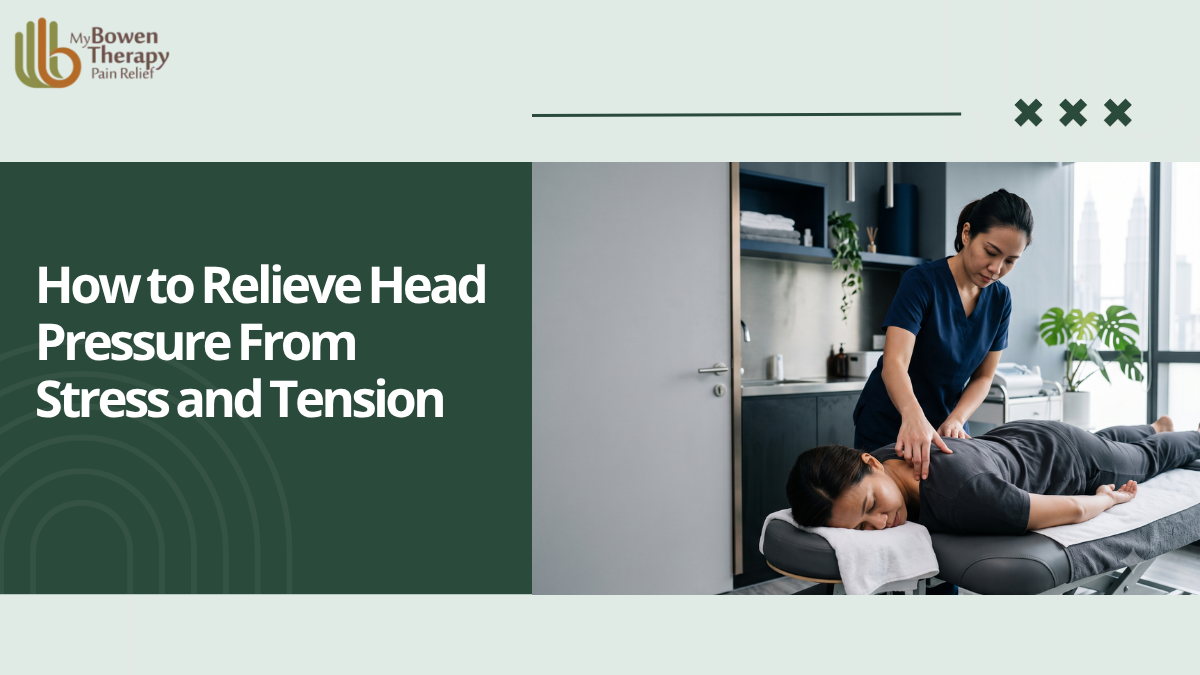
Bowen Therapy is one gentle, hands-on method used within a wider assessment-led approach. It involves light, precise movements over selected muscles and soft tissues, with short pauses between them. There is no cracking, no forceful manipulation, and no machines, oils, or exercises during a session.
To be clear about what it is and is not, gentle hands-on care is not a treatment for headaches or migraines and does not replace medical care. Where an assessment finds soft tissue tension through the neck, shoulders, or jaw linked to everyday habits, it may be considered as one way to support comfort and ease of movement.
Why People Choose My Bowen Therapy
Choosing where to go for support with ongoing tension is a personal decision, and it helps to know a little about who you would be working with. At My Bowen Therapy, we start by understanding your posture, movement, areas of tension, and everyday habits before deciding what may be suitable.
Our approach is:
- Gentle
- Hands-on
- Non-invasive
- Drug-free
- No machines
- Focused on long-term movement comfort
Why people choose My Bowen Therapy:
- 22,000+ clients supported across Kuala Lumpur
- 4.9-star Google rating from 700+ verified reviews
- Established in Kuala Lumpur since 2015
- Locations in Damansara/TTDI and KLCC, Etiqa Twins
- Treatments starting from RM130
- Free consultation and posture analysis for new clients
- Suitable for people who prefer a natural, hands-on approach
Our Kuala Lumpur Locations
Visit My Bowen Therapy at our two convenient Kuala Lumpur locations for gentle, hands-on
Bowen Therapy support with pain, posture, tension and movement concerns.

Damansara / TTDI Area
-
 Next to TTDI MRT station
-
 Street parking available nearby
-
 Lift Access Available
-
 Open daily, 9am–5pm
 WhatsApp Us
Near KLCC / Etiqa Twins
-
Located within the KLCC business district
-
Convenient for office workers
-
Escalator & Lift access available
-
Open Tues (8am–4pm), Wed–Thurs (9am–5pm)

I’ve spent many years managing lower back pain, neck tension, vomit inducing headaches, the whole shebang. New to Malaysia, I’m very thankful to have been introduced to Bowen Therapy. It’s not only affordable but gave me immediate relief when I was thankfully accommodated a last minute appointment during one of my headache episodes.
Never pressured into buying packages or more sessions, I happily purchase my packages knowing I have very deep rooted problems and My Bowen Therapy journey has just begun. Just had a very severe headache episode, Bowen therapists are available and ready to help. Special mention to Aazeen who replied me on her day off to give me exercises, stretches and advice to manage my pain til our next session. Do consider a session with any of the bowen therapist and hopefully you too will be on your way to pain free being

Therapist Ala @My Bowen Therapy has been live changing for me. So many wasted months before in paid sorted out in 6-7 sessions over 2 months
Easing the Pressure
Head pressure from stress and tension is common and usually harmless, but it can wear you down when it keeps returning. It tends to build through tight muscles in the neck, shoulders, and jaw, with sleep, hydration, caffeine, and screen habits adding to the load.
In the moment, a break, some water, warmth on the neck and a conscious effort to unclench can help. Over time, the bigger difference usually comes from spotting your own triggers and changing the patterns behind them.
If tension through your neck, shoulders or jaw keeps feeding into head pressure and you would like to understand how your posture and daily habits may be contributing, you are welcome to arrange a musculoskeletal assessment with our team in Damansara/TTDI or KLCC. For frequent, changing or severe headaches, please see a doctor first.
Frequently Asked Questions
Step away from the screen, drink some water, put warmth or a cold pack on your neck and shoulders, and consciously unclench your jaw and drop your shoulders. Slow breathing or a short walk can also help. Painkillers should not be used on more than 10 days a month.
It usually feels like steady pressure or a tight band around both sides of the head, often with stiffness in the neck and shoulders. It is usually dull rather than throbbing and does not normally cause nausea or light sensitivity.
Tension in the head is most often linked with stress and tight muscles in the neck, shoulders, jaw and scalp. Long screen hours, poor sleep, dehydration and caffeine can add to it. If the feeling is new, severe or changing, see a doctor.
Tension headaches can last from around 30 minutes to several days. Most people have them occasionally. If you have headaches on most days, or need painkillers most days, speak to a doctor.
Tight muscles in the neck and shoulders are commonly linked with tension-type headaches, and the tightness can spread up into the scalp. Screen posture, holding a phone against your shoulder, and stress can all add to this tension.
Bowen Therapy is not a treatment for headaches or migraines and does not replace medical care. Where an assessment finds soft tissue tension through the neck, shoulders or jaw linked to everyday habits, it may be considered as one gentle way to support comfort.