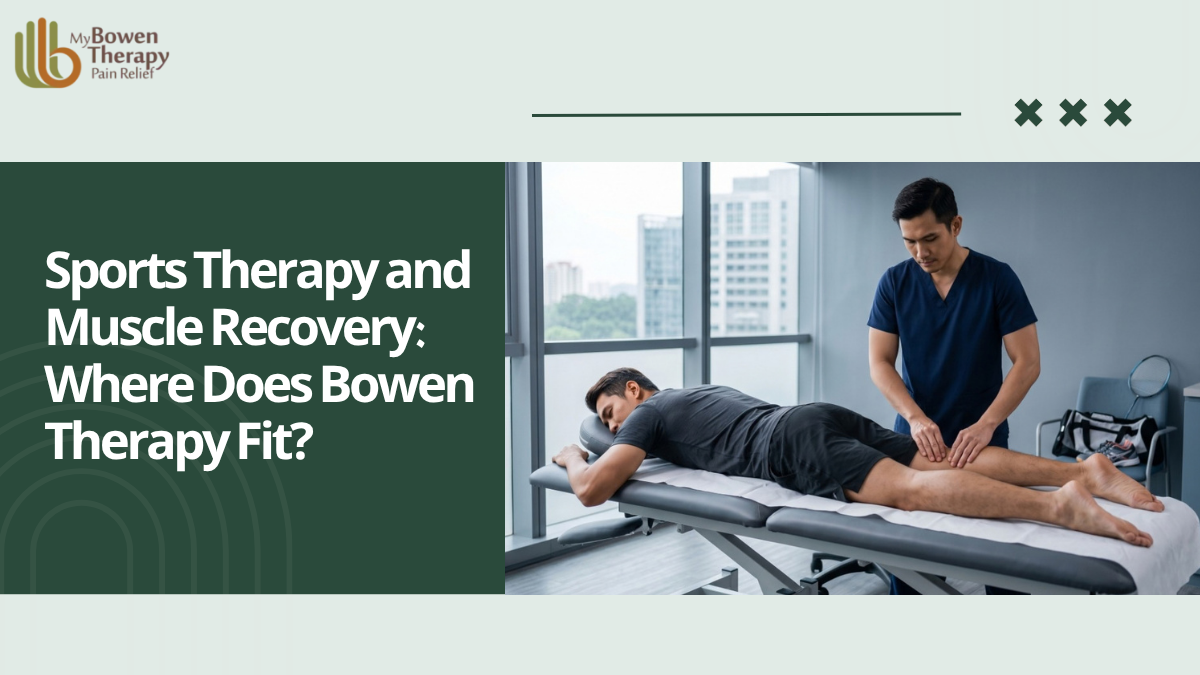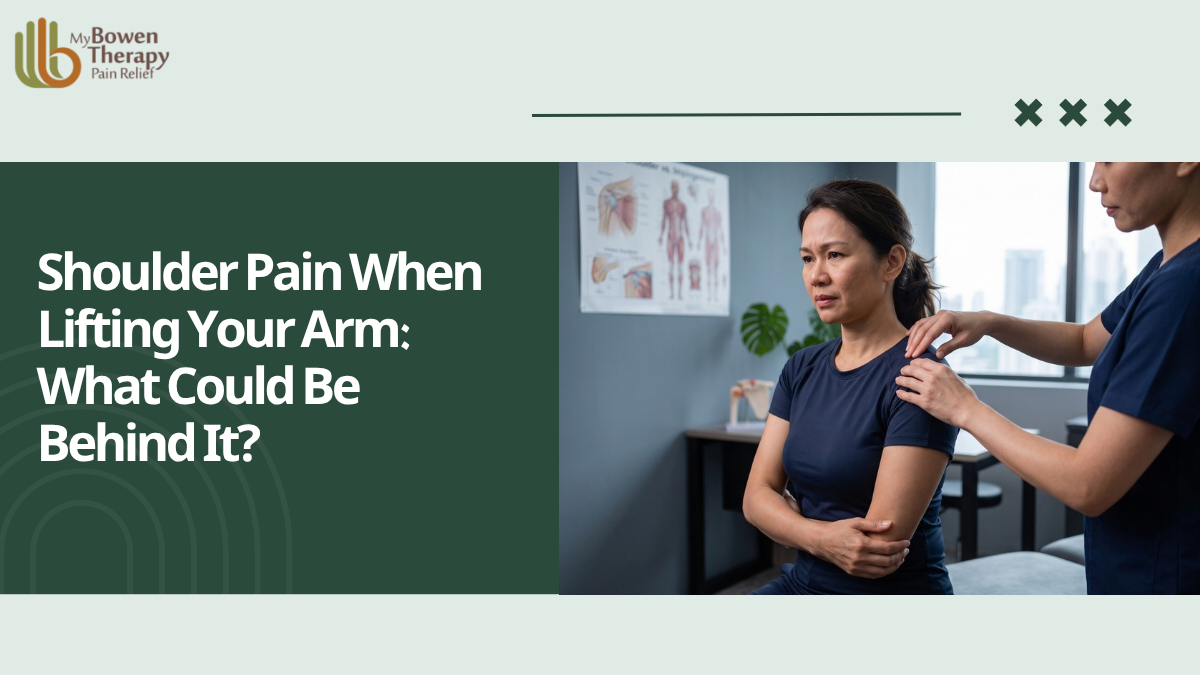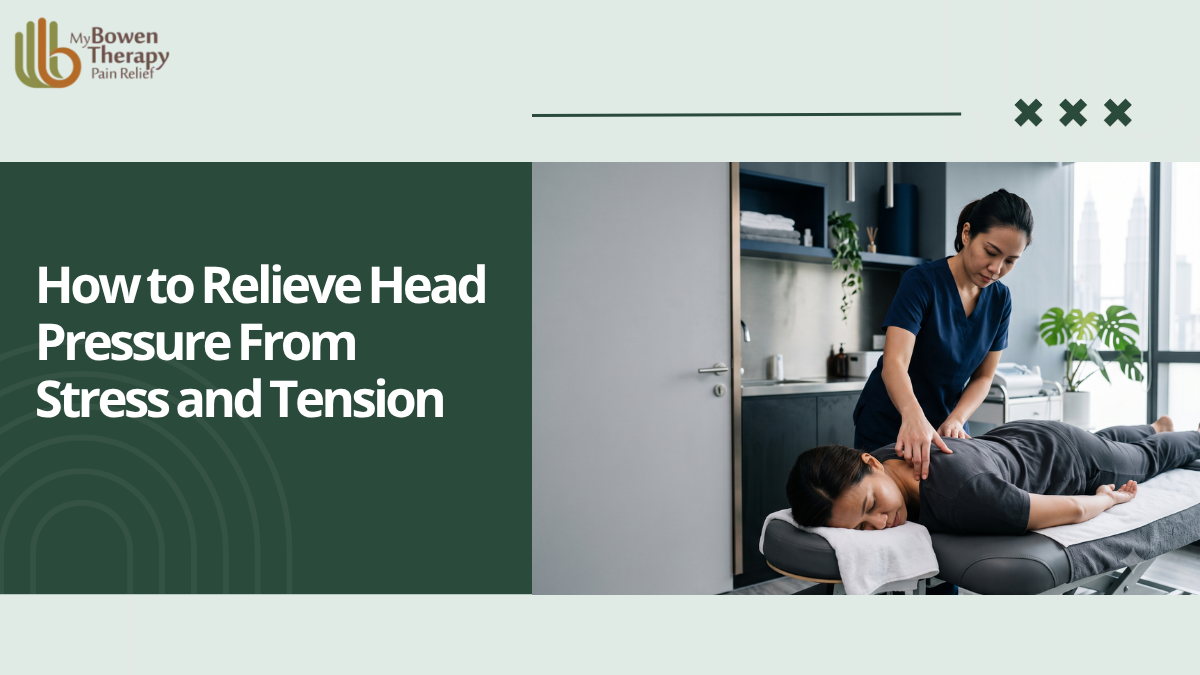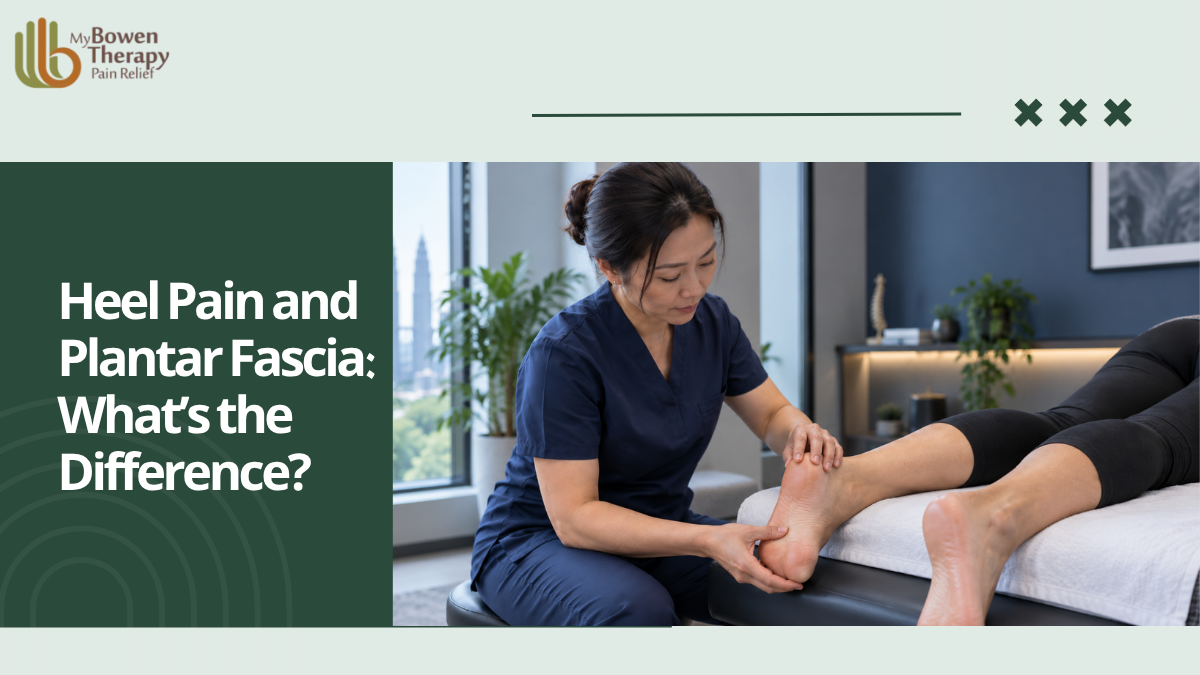


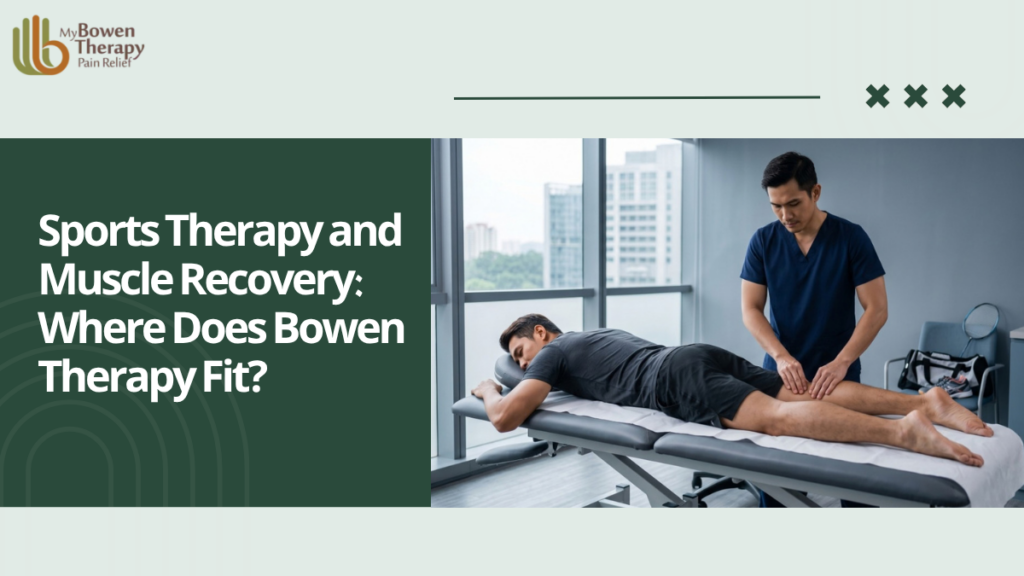
The morning after a new gym class, the stairs feel like a mountain. Your legs ache, your arms feel heavy, and sitting down takes more effort than it should. Or it is something sharper: a pulled muscle in the back of the thigh halfway through a futsal match, or a twinge in the calf on the last kilometre of a run around the park.
These are two quite different experiences, and they need different things. This guide to sports recovery looks at what muscle recovery involves, how to tell ordinary soreness from a strain, how long a muscle strain usually takes to settle, where sports therapy and sports massage sit, and where Bowen Therapy fits as a gentle hands-on option.
Key Takeaways
- Muscle recovery is mostly the body’s own repair process. Sleep, food, fluids, rest days, and a gradual return to activity do most of the work.
- Sore muscles after a workout, known as DOMS, usually build over a day or two and ease within days. A sudden, sharp pain during activity is more likely to be a strain.
- NHS guidance notes most sprains and strains feel better after about two weeks, though strenuous exercise may need to wait longer.
- Different hands-on approaches suit different people. Bowen Therapy is one gentle, hands-on support option within a wider assessment-led approach.
- A popping sensation with sudden pain, or severe muscle pain with dark urine after hard exercise, needs medical attention.
What Does Muscle Recovery Actually Involve?
Recovery is the process of your body repairing and adapting after exercise or injury. Most of it happens without any outside help.
With muscle recovery after a workout, the muscles repair small areas of strain and gradually become better able to cope with that load next time. Sleep, enough food and fluids, and time between demanding sessions give that process what it needs. Cleveland Clinic describes post-exercise soreness as usually a sign the body is repairing and rebuilding muscle fibres after using them differently.
Hands-on approaches of any kind are, at most, a support alongside this process. They do not replace rest, recovery habits, or a sensible return to training.
Sore Muscles After a Workout, or a Strain?
Sore muscles after a workout and a muscle strain feel different, and telling them apart helps you decide what to do next.
| What you notice | Often linked with |
|---|---|
| A dull, widespread ache in the muscles you worked, building one to three days later | Normal post-exercise soreness |
| Sudden, sharp pain during activity, sometimes with bruising or weakness | A muscle strain, often called a pulled muscle |
| Pain near a joint where a muscle attaches, building with repeated activity and often stiff first thing | An irritated tendon |
| A popping sensation, rapid swelling, or being unable to use the limb | A more significant injury |
This table is not a self-assessment tool. Soreness can mask a minor injury, and only a doctor or healthcare professional can confirm what has happened.
Book a free cosultation
Speak with one of our therapists, discuss your concerns and understand whether Bowen Therapy may be suitable for your needs.

What Is DOMS?
DOMS stands for delayed onset muscle soreness, the ache that shows up in your muscles a day or two after a hard or unfamiliar session. Cleveland Clinic notes that it builds over several hours, is usually felt one to three days after exercise, and affects the specific muscles you worked, which is why leg day so often means sore legs and glutes the next morning.
It is a normal response to new or harder training, not a sign of damage. Soreness so severe that it makes it hard to move, or comes with swelling or dark urine, is different and needs a doctor.
When to See a Doctor
Most soreness and minor strains settle with time, but some signs need medical attention.
Get urgent medical care if you have:
- A popping sensation with sudden pain, or you cannot put weight on or use the limb
- A limb that looks out of shape, or severe swelling and bruising
- Severe muscle pain and weakness after intense exercise, especially with dark urine
- Calf pain with swelling, warmth or redness
See a doctor promptly if you have:
- Numbness, tingling or weakness
- Pain that is getting worse rather than better
- A strain that is not improving after a couple of weeks of looking after it
This list cannot tell you what is causing your pain. If something feels wrong, speak to a doctor.
Can You Work Out With DOMS?
Working out with DOMS is usually fine, as long as the soreness is mild and you keep the session lighter. Cleveland Clinic suggests easing up on intensity and training different muscles while the sore ones recover.
Gentle movement, such as walking, an easy swim or a light cycle, often helps sore muscles feel looser. What usually helps the soreness ease is simple: good sleep, enough food and fluids, and a day or two of lighter training. Soreness should fade within a few days on its own. If running with DOMS or training on sore legs turns into sharp or worsening pain, stop and have it checked.
How Long Does a Muscle Strain Take to Recover?
Muscle strain recovery time depends mostly on how severe the strain is. Mild strains often settle within a couple of weeks, while more significant ones take longer.
NHS guidance notes that after two weeks, most sprains and strains feel better. It also advises avoiding strenuous exercise such as running for up to eight weeks because of the risk of further damage, and that severe sprains and strains can take months to get back to normal.
These are general ranges, not a prediction for your injury. Everyone heals at a different rate, and returning to full training too early is one of the most common reasons a strain lingers or comes back.
What Usually Helps After a Muscle or Tendon Strain?
For the first few days after a strain, NHS guidance recommends an approach known as PRICE, followed by a gradual return to movement.
In the first two to three days, the NHS suggests:
- Protection: protect the injured area from further harm.
- Rest: stop the activity that caused it.
- Ice: apply an ice pack wrapped in a towel for up to 20 minutes every two to three hours.
- Compression: use a supportive bandage.
- Elevation: keep the area raised where you can.
After that, gentle movement usually matters. NHS Inform notes that too much rest can slow recovery, and that a little activity is better than nothing once you are able to move.
Tendons tend to settle more slowly than muscles and usually respond best to load being reintroduced gradually rather than pushed hard. If a tendon keeps flaring up with activity, or a strain is not improving, it is worth having it properly assessed. A pharmacist can advise on pain relief.
What Is Sports Therapy, and Where Does Sports Massage Fit?
Sports therapy is a broad term for care focused on preventing, managing and recovering from exercise-related injuries, usually including assessment, rehabilitation and a structured return to sport.
Sports massage is a form of hands-on soft tissue work often used by active people before or after training, or as part of recovery. It usually involves firmer, continuous pressure applied to the muscles.
Both are established approaches, and different people find different options suit them. What works for one person, one sport, or one stage of recovery may not suit another.
Book a posture & Movement Assessment
Speak with one of our therapists, discuss your concerns and understand whether Bowen Therapy may be suitable for your needs.
Where Does Bowen Therapy Fit in Muscle Recovery?
Bowen Therapy is a distinct approach. It is a gentle, hands-on method that uses light, precise movements over selected muscles and soft tissues, with short pauses between them. There is no deep pressure, no oils, no cracking or forceful manipulation, and no machines or exercises during a session.
At My Bowen Therapy, it is used as one option within a wider assessment-led approach. Fascia, the connective tissue that surrounds and links muscles, responds to repeated training loads, one-sided sports, and long days sitting before evening sessions. Where an assessment finds soft tissue tension or areas that seem to be compensating for others, gentle hands-on care may be considered as one way to support comfort and ease of movement.
To be clear about what it is and is not, Bowen Therapy is not a treatment for muscle strains, tears or tendon injuries, and it does not replace medical care or a structured return-to-sport plan. It tends to suit people who prefer a gentler, lighter-touch option alongside their own recovery habits.
Everyday Recovery Habits That Matter Most
Most of recovering well comes down to a handful of everyday habits.
- Sleep well. Much of the body’s repair work happens during sleep.
- Eat and drink enough, especially after long or hot sessions. KL heat and humidity mean you can lose more fluid through sweat than you realise.
- Warm up. The NHS lists not warming up and tired muscles among the common causes of sprains and strains.
- Build training gradually rather than jumping in intensity or volume.
- Plan rest days, and vary hard and easy sessions.
- Notice one-sided load. Badminton, tennis and golf work one side far harder than the other.
- Respect sharp pain. A dull ache is often normal. Sharp pain during activity is a signal to stop.
What Does a Musculoskeletal Assessment Look At?
A musculoskeletal assessment looks at how your body moves and where it holds tension, alongside any medical advice you have been given.
It generally considers your training routine and recent changes, previous injuries, how you move through the areas that feel tight or sore, one-sided patterns from your sport, your posture, and how a working day spent sitting fits around your training.
It does not diagnose muscle tears, tendon injuries, or fractures, and it does not replace seeing a doctor.
Why People Choose My Bowen Therapy
Choosing where to go for support with recovery is a personal decision, and it helps to know a little about who you would be working with. At My Bowen Therapy, we start by understanding your posture, movement, areas of tension, and everyday habits before deciding what may be suitable.
Our approach is:
- Gentle
- Hands-on
- Non-invasive
- Drug-free
- No machines
- Focused on long-term movement comfort
Why people choose My Bowen Therapy:
- 22,000+ clients supported across Kuala Lumpur
- 4.9-star Google rating from 700+ verified reviews
- Established in Kuala Lumpur since 2015
- Locations in Damansara/TTDI and KLCC, Etiqa Twins
- Treatments starting from RM130
- Free consultation and posture analysis for new clients
- Suitable for people who prefer a natural, hands-on approach
Our Kuala Lumpur Locations
Visit My Bowen Therapy at our two convenient Kuala Lumpur locations for gentle, hands-on
Bowen Therapy support with pain, posture, tension and movement concerns.

Damansara / TTDI Area
-
 Next to TTDI MRT station
-
 Street parking available nearby
-
 Lift Access Available
-
 Open daily, 9am–5pm
 WhatsApp Us
Near KLCC / Etiqa Twins
-
Located within the KLCC business district
-
Convenient for office workers
-
Escalator & Lift access available
-
Open Tues (8am–4pm), Wed–Thurs (9am–5pm)

I’ve been a regular customer here since 2022 and can confidently say this place is a hidden gem for anyone needing a quick, effective “fix” — whether it’s from long hours at the office, post-sports soreness, or travel fatigue. I’ve recommended it to countless family and friends, and they’ve all been equally impressed. My go-to therapist is Ala, and she’s been absolutely wonderful. Her intuitive touch and skillful technique always leave me feeling recharged and pain-free. Highly recommended!

As an athlete for 30+ years, I know injury and muscles soreness are part of the game. To improve, we need train more intense and longer hours. There is a fine line between getting fitter/stronger and injury.
Over the years, I have tried many different modalities to treat injury. Dry needling, shockwave, cryo therapy, massage and many more. Most of it gives quick relief but not permanent.
Bowen is the direct opposite. Sometimes I felt immediate relief but most often than not, body slowly recovered after 3-5 days after fascia adjustments. But injury is gone permanent or at least 90%.
Thanks to Kieran for keeping me injury free and sound. Body no injury = me able to increase training intensity 🙂
Recovery Starts With the Basics
Recovery is mostly your body doing its own repair work. Sleep, food, fluids, rest days and a gradual return to activity do the heavy lifting, while ordinary soreness usually eases within days.
A strain is different. It needs a few days of protection, a gradual return to movement, and patience before strenuous exercise. Different hands-on approaches suit different people, and the right fit depends on the person, the sport and the stage of recovery.
If you would like to understand how your movement and training habits may be contributing to recurring tension, you are welcome to arrange a musculoskeletal assessment with our team in Damansara/TTDI or KLCC. For a suspected injury or anything on the warning list above, please see a doctor first.
Frequently Asked Questions
DOMS usually builds over one to three days after exercise and then eases within a few days. Sleep, food, fluids and rest days all support recovery. Soreness that is severe, getting worse, or comes with dark urine or swelling should be checked by a doctor.
Soreness is a dull, widespread ache in the muscles you worked, usually felt a day or two later. A strain usually causes sudden, sharp pain during activity, sometimes with bruising or weakness. If you are unsure, have it checked.
It depends on severity. NHS guidance notes most strains feel better after about two weeks, but advises avoiding strenuous exercise for up to eight weeks. Severe strains can take months.
For the first two to three days, NHS guidance recommends protection, rest, ice, compression and elevation. After that, gradual movement usually helps. Tendons often settle slowly, so a tendon that keeps flaring up with activity should be assessed.
No. Sports massage usually involves firmer, continuous pressure, while Bowen Therapy uses light, precise movements with short pauses, and no deep pressure or oils. They are different approaches, and people often choose based on what feels right for them.
Bowen Therapy is not a treatment for strains, tears or tendon injuries and does not replace medical care. Where an assessment finds soft tissue tension linked to training or everyday habits, it may be considered as one gentle way to support comfort and movement.